
By Mike Fitzgerald, Contributor at Wild Nexus
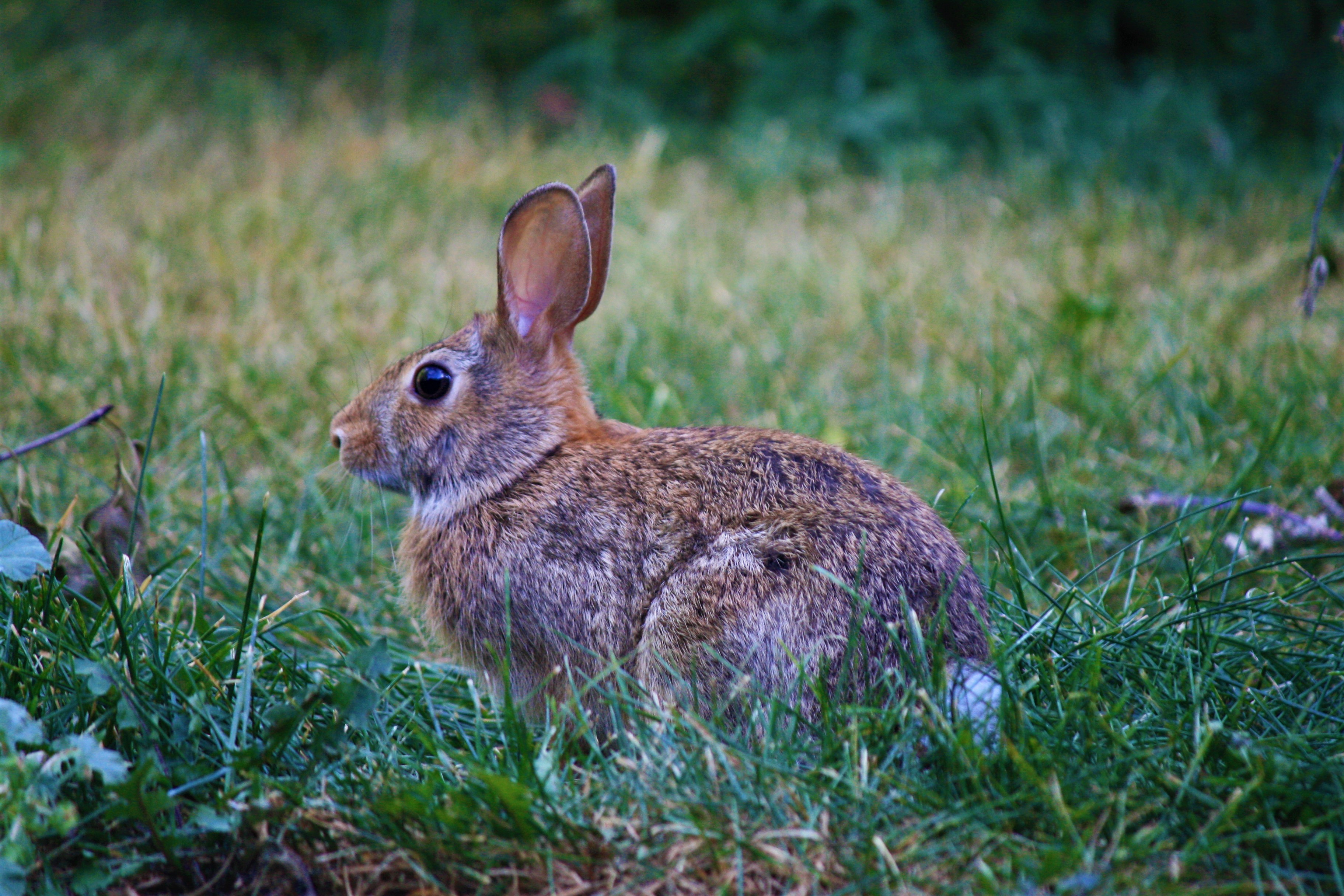
You can’t help but love, as a hunter at least, a season that is open more days than it’s closed, and for that reason alone, I love to target cottontail rabbits. It also helps that their meat is perhaps some of the best table fare in the world of small game hunting, too. The thing is, they can be a little tricky to understand, much less hunt successfully.
Luckily, through trial and error, a little bit of research, and a good shooting shotgun or .22 rifle, hunting cottontails doesn’t have to be a daunting task, especially for new hunters. In fact, it can be some of the most rewarding action that we see all year, and when you consider that the bag limits for cottontails are generally very liberal, it’s all the more reason to get out and give them a shot.
Where To Find Them
The great thing about cottontail rabbits is that they are extremely adaptable to pretty much all sorts of climates and conditions. You can find them in most provinces of Canada, most states east of the Rockies in the continental United States, in various types of habitat, so the good news is that if you’re reading this, it’s likely that good cottontail opportunities aren’t too far away.
Cottontails enjoy daytime cover using whatever they can find, including fallen trees, low-lying shrubs, tall grass, hedgerows, and even garbage like old cars and farm machinery. Where I hunt them, they make particular use out of juniper bushes that spread out low to the ground, creating little rabbit networks that remain unseen to avian predators.
Rural farms and landscapes with human presence tend to attract cottontails, especially if crops are involved. A cottontail doesn’t need much to conceal itself, so if you’re looking at any sort of ground covered that is dense enough to hide something roughly the size of a football, be sure to give it a look.
When To Hunt Them
There’s really no bad time to hunt cottontails as long as it’s open legal season in your neck of the woods, but if I had to pick one time of the year to really put the pressure on these little lagomorphs, it would be winter. The reason for this is that you have to keep in mind that cottontail rabbits don’t have a very large home range, and they are uniquely territorial, so when the snow flies, their tracks will betray their preferred hangouts and thus you, the hunter, can capitalize on the places where they are frequenting.
Another thing that all fur bearing mammals have in common is that during the warmer months, they’ll probably have fleas. This is reason enough for me to forgo the early autumn hunts and focus on cottontails during the cold winter months. If you’re like me and you won’t want to be covered in fleas that have been breeding against the skin of rabbits, I highly recommend waiting until after a couple of strong frosts have passed through your area to organize a hunt.
How To Hunt Them
Folks love to romanticize running a pack of beagles for rabbits but I’m here to tell you that it’s not necessary at all. In fact, sometimes all that it takes is two hunters who can coordinate and work together. Basically, all that you want to do is identify an area that you know cottontails call home and methodically work each piece of cover while the other hunter stays on the flank while making an educated guess on which direction the theoretical cottontail may try to escape through. This is a smaller scale version of what’s called a “drive” – the act of multiple hunters pushing through cover with the intention of moving game.
With that being said, the solo hunter can find success as well, but you have to be sharp and ready for the moment that a cottontail breaks from cover. The logistics are the same, but the work is essentially doubled; you’re pushing through cover, often with a good-shooting twenty gauge shotgun (leave those rimfire rifles at home for this hunt). In this situation, I like to work areas where there are downed trees, brush piles, things of this nature, because I can give them a kick while maintaining good posture in cause a rabbit flushes out, at which point I can dispatch it with one good clean shot.
Another method that works is called ‘still hunting’, in which a hunter with the knowledge that cottontails actively use a certain area can slowly walk through with a sharpshooting .22 rifle and find success by hunting during the first and last hour of legal shooting light. Cottontails are notoriously sensitive in late autumn and winter to daylight, preferring to hunker down somewhere during the day and becoming increasingly nocturnal.
This bodes well for the solo hunter who can make use of a rimfire rifle and spot rabbits from forty or fifty yards away, having just come out from their hiding places to begin feeding. Again, this tactic is more useful if you hunt an area where you know for sure that cottontails are frequenting, and that you know that they’re prone to venturing out during legal shooting light.
As I mentioned, cottontails are remarkably territorial, and that’s especially true with the males (called “bucks”), so if you take a rabbit from one area, a good method is to move along into a new spot some distance away, as it’s more than likely that you just harvested the only rabbit within that territory. But then again, every now and then I get surprised by two rabbits that decided to pair up in the dead of winter and live within close proximity to one another.
Gear For the Hunt
Hunting cottontail rabbits doesn’t have to be complicated, but there are a few items that I would not go into the field without. One is as many articles of clothing in hunter orange as possible if you are planning on hunting with other individuals. Cottontail habitat can be thick, nasty stuff, and the rabbits themselves sometimes have a habit of breaking cover between two hunters. No one wants to catch some shotgun pellets accidentally, so the more visibility available, the less likely it is that a mistake will happen.
For firearm selection, I usually use a reliable twenty gauge pump action shotgun, though in the dead of winter, I’m not against doing a solo hunt with a .22 calibre rimfire rifle, either. Both have their time and place, but the shotgun will always be more effective.
Rabbits like thorns, briars, all the terrible stuff that wrecks cheaper clothing, so having a good pair of breathable boots and upland pants with extra thick front ends from the ankles up to the knees will protect you from getting chewed up.
For shot size, I like to keep things simple. Rabbits often bolt from cover, and when you see them, they’ll be in dense brambles, so for this reason alone, I use a three inch shotgun shell loaded with number four pellets, which have no issue cutting through brush to reach their intended target. For .22 rounds, you can usually get away with a subsonic round, but if you’re expecting to do some distance shooting, a load that shoots faster is always better.
Don’t let some of the best hunting of the year pass you by, especially when you’ve exhausted all other opportunities. Cottontails are worth every ounce of energy it takes to pursue them, and when that bowl of rabbit ragu is in front of you, everything will make sense.


Leave a Reply