
By Cody Fongemie, Contributor at Wild Nexus
We all love being out there in the blind, on the stand, or just out for a hike. But nothing puts a damper on being out there more than bad weather. I am talking about those cold days when the wind cuts through you or the raw days when you get drenched to your core. Any of those feelings can run you experience. So how do you prevent that?
Easy, you layer your clothes, now I know most of us do this in some way or form, like a long-sleeve cotton t-shirt and your favorite camo top. But that layering is not helping you, honestly, it could be making your situation worse. But there is a great way to layer that will let you stay out in the worst conditions possible.
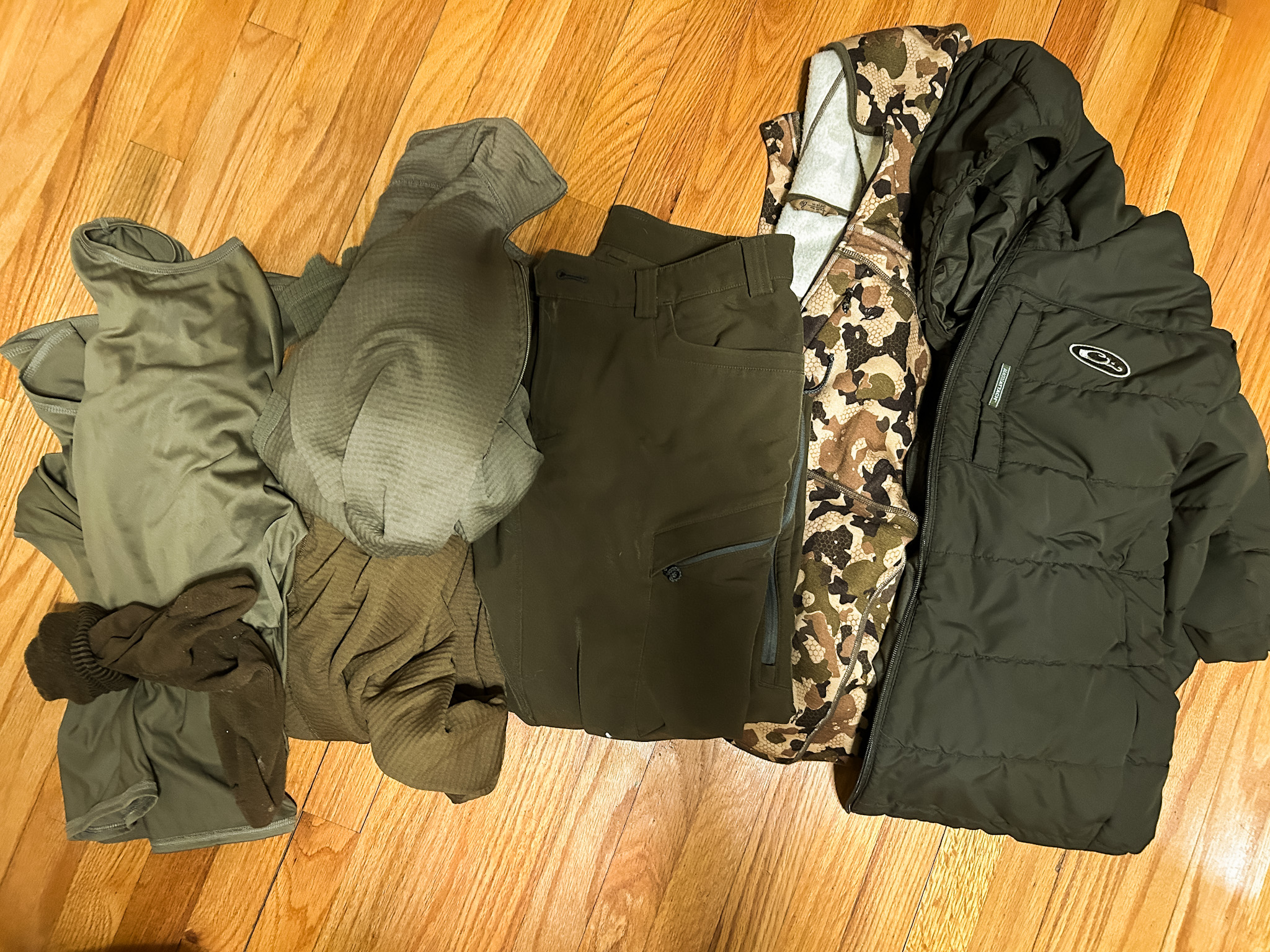
After one particularly cold and wet duck hunt, which was miserable, I had to figure out a better way to endure the elements, to layer. So I did a deep dive on the U.S. Army’s Extended Cold Weather Clothing System (ECWCS). The ECWCS system, developed in the 1980s and refined over decades, really breaks down what you should wear and how to wear it. It consists of seven levels, each serving a specific purpose in cold-weather operations, but its principles—moisture management, insulation, and protection—apply universally to outdoor activities like hunting. Soldiers rely on ECWCS to maintain combat readiness in temperatures as low as -60°F, and hunters can borrow these ideas to stay alert and effective, reducing the risk of weather-related distractions that could spoil a shot or endanger safety.
Understanding the ECWCS framework begins with its foundational philosophy: no single garment does it all; instead, a series of interchangeable layers work in harmony.
Level 1 is the base layer, typically lightweight polyester or silk long underwear that wicks sweat away from the skin to prevent clamminess. This is crucial for hunters, as trekking to a stand or blind often builds up perspiration, and a damp base can lead to rapid heat loss once stationary.
Level 2 builds on this with midweight base layers, like thicker fleece-lined thermals, adding a bit more insulation without restricting movement. For hunters, these initial layers should be scent-free or treated with odor-eliminating technology, as game animals have keen senses that can detect human smells embedded in fabrics.
Level 3, ECWCS introduces a high-loft fleece jacket for primary insulation, trapping air to retain body heat. In hunting scenarios, this translates to mid-layers like wool or synthetic fleeces that provide warmth during long sits but can be vented or removed if activity levels rise.
As we progress through the ECWCS levels, the focus shifts toward protection from external elements, which is equally vital for hunters exposed to wind-whipped ridges or rainy lowlands. Level 4 is a wind-resistant shirt, often made from nylon, designed to block gusts while remaining breathable. Hunters can adapt this with lightweight windbreakers in camouflage patterns, ensuring they cut through breezes without rustling noisily—a key consideration when stealth is paramount.
Level 5 introduces soft-shell jackets and pants, which offer water resistance and flexibility for active movement. These are ideal for hunters during transitional weather, providing a balance of insulation and mobility for pursuits like spot-and-stalk hunting.
Levels 6 and 7 are where heavy-duty protection comes in: Gore-Tex or similar waterproof/breathable shells for wet conditions, and extreme-cold-weather parkas filled with down or synthetic insulation for sub-zero hunts.
Start with a moisture-wicking base like merino wool, which naturally resists odor and regulates temperature better than cotton, which absorbs sweat and can chill the body. Over this, add insulating mid-layers such as grid fleece pullovers or vests that allow for easy adjustment. Zippers and vents are your friends here, helping you dump heat quickly during hikes. For the shell, invest in a high-quality waterproof jacket or, in some cases, a wader. Remember, the key ECWCS principle of modularity means carrying a pack to store shed layers, preventing overheating that could lead to excessive sweating and subsequent cold.
Beyond the layers themselves, effective layering for hunting requires attention to accessories and overall strategy, much like how ECWCS integrates with other gear. Gloves, hats, and neck gaiters should follow the same wicking-insulating-protecting triad: thin liner gloves under insulated mittens, with waterproof overmitts for wet conditions. Footwear layering is often overlooked, but it’s critical: moisture-wicking socks under insulating wool socks, paired with breathable boots.
You should test your setups in advance, simulating field conditions to identify gaps. Get your waders and rain jacket on and stand in the shower to make sure you stay dry. Go for a hike with your first few layers on to see how they are working. If you do this stuff and layer smartly, you’re going to be able to be out there more, and that’s what you want!


Leave a Reply