
By Mike Fitzgerald, Contributor at Wild Nexus
Back when I started fishing for trout, I didn’t have access to long and winding mountain rivers so large that intimidation was the first thing you might catch. Quite the opposite, what was accessible to me then were the tiny tributaries that harboured equally small trout, but like a lot of other young anglers, I had to make do with what was accessible to me. In the end, these small rivers and creeks taught me more about reading water and catching trout than any other body of moving water ever has.
You can’t put a price on those kinds of lessons if you are someone who both loves trout and the places where they live, but reading these streams can be a little daunting to anyone who is new to the whole thing, so let’s take a look at the basics of reading small trout streams and how to go about it.
How to Find Them
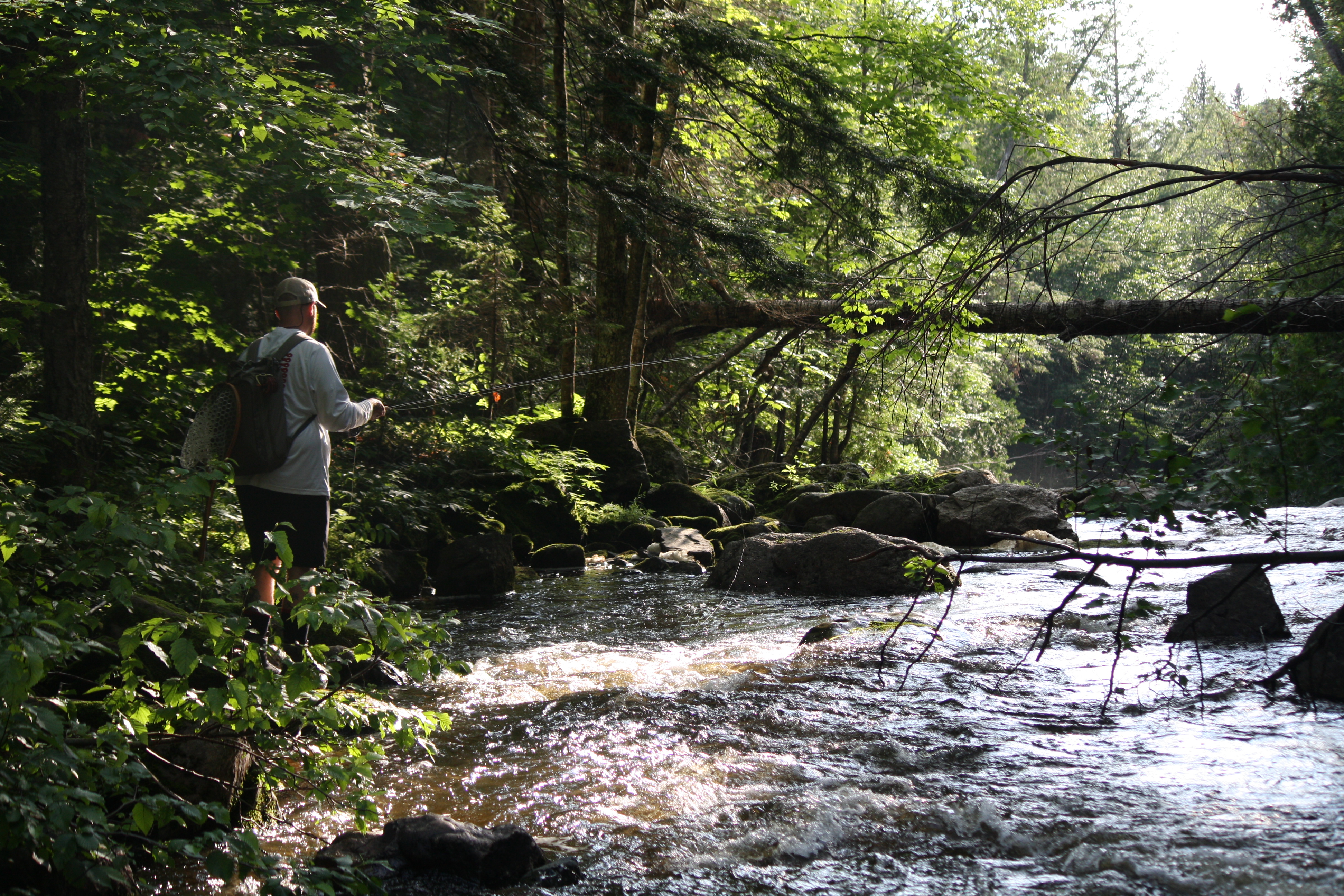
Trout need a few basic things in order to survive: food, shelter, and oxygen. A fourth would be cold, or in some cases, cool water. If you find these four things all in one place, you’re already halfway there. The thing about small streams is that these things are generally condensed and well laid out. Shelter comes in the form of undercut banks, logjams, overhanging brush and grasses, as well as deep pools. Add a thick overhead canopy that shades the water and you’ve got yourself a recipe for good trout fishing.
Trout can sometimes occupy remarkably skinny water if the conditions are conducive. Current seams are a great place to start your search, and these are usually created by a break in the current, like a boulder, stump, or a bridge piling. Trout love these because they can sit behind the obstruction, out of the current, where they can conserve energy and also ambush food items like aquatic insects.
Deep pools, especially if they have a little bit of structure in or around them, like a fallen tree or a large boulder, are easy places where a trout can feel safe. Because small streams offer limited living space, you will sometimes find the biggest trout in places like these, while the smaller specimens take up residency in less than ideal locations.
Pools are often fished by several different ways, and depending on the time of year, fish will often give up their position if you stand back from the water, keep your presence low, and watch for a while. Aquatic insects hatching become food for the trout that live there, and often the trout will feed right on the surface as the bugs drift by. On bigger bodies of water the trout often have the ability to be selective with which insects they consume, especially if the current isn’t too strong, but in a tumbling freestone creek, the fish sometimes don’t have that privilege, and instead must eat whatever appears to be food, which often means that an angler might see a lot more feeding activity on the surface if they remain quiet and observant.
The front of a pool is called the head, while the back of the pool is called a tail-out, and trout can be found throughout the entire pool, so fishing such a location should be done methodically.
Undercut banks are a great place to locate trout because they offer the same sort of ideal benefits that make a trout feel safe, as well as put food in its belly. An undercut bank is usually, but not always, found on a bend in the creek or stream, caused by where stronger currents eat away at the bottom of a stream bank and create a hideaway usually just big enough for a couple of fish to tuck away into.
I am always surprised at how many trout will tuck themselves in and around a logjam on a small stream. Sometimes the water depth isn’t even knee deep. These locations look like giant beavers have tried to build a dam along the shore. These can create massive networks of smaller pockets (think of a pocket as a mini pool) alongside them, where fish will hunker down to feed on nymphs as they float by.
What it all comes down to in the end is the characteristics of the small stream. A creek on the north shore of Lake Superior isn’t going to behave the same way a freestone stream in Colorado does, and the same can be said about the trout that live in them, but what is the same is the needs of those fish, and once you start reading water on small trout streams, the more likely you are to start understanding those fish, which ultimately will lead you to catching more.
That sounds like fun to me.


Leave a Reply