
By Johnny Vesper
My first lesson on how quickly a hunt can go sideways
A splash erupted in the creek just beside the panicking deer who was now swimming frantically for its life. Then another and another. Errant, chaotic shots sent geysers jettisoning from the surface of the creek inches away from the fleeing animal. The report of my old Remington 870 echoed off the hill behind me as the 12-gauge slugs hammered and zipped through the churned-up water. To a passerby it would have seemed like a real, authentic gun fight. I racked again, ejecting my last round, the empty shell bouncing off the rocks between the railroad tracks where I stood. Then a deflating, “click.”
The deer was nearly across to the other side. There it would disappear onto the neighbor’s property and surely die of its wound. Though leaving no significant blood trail it would be gone from my life forever in the worst way possible. I felt sick. I fumbled with another shell from my pocket. My mind was gone. My hands shook badly. How did this all happen so quickly? One rushed shot, a poor decision, a dump of adrenaline mixed with a dose of doubt and frustration. Not a good combination. But any honest hunter would admit— We have all been there.
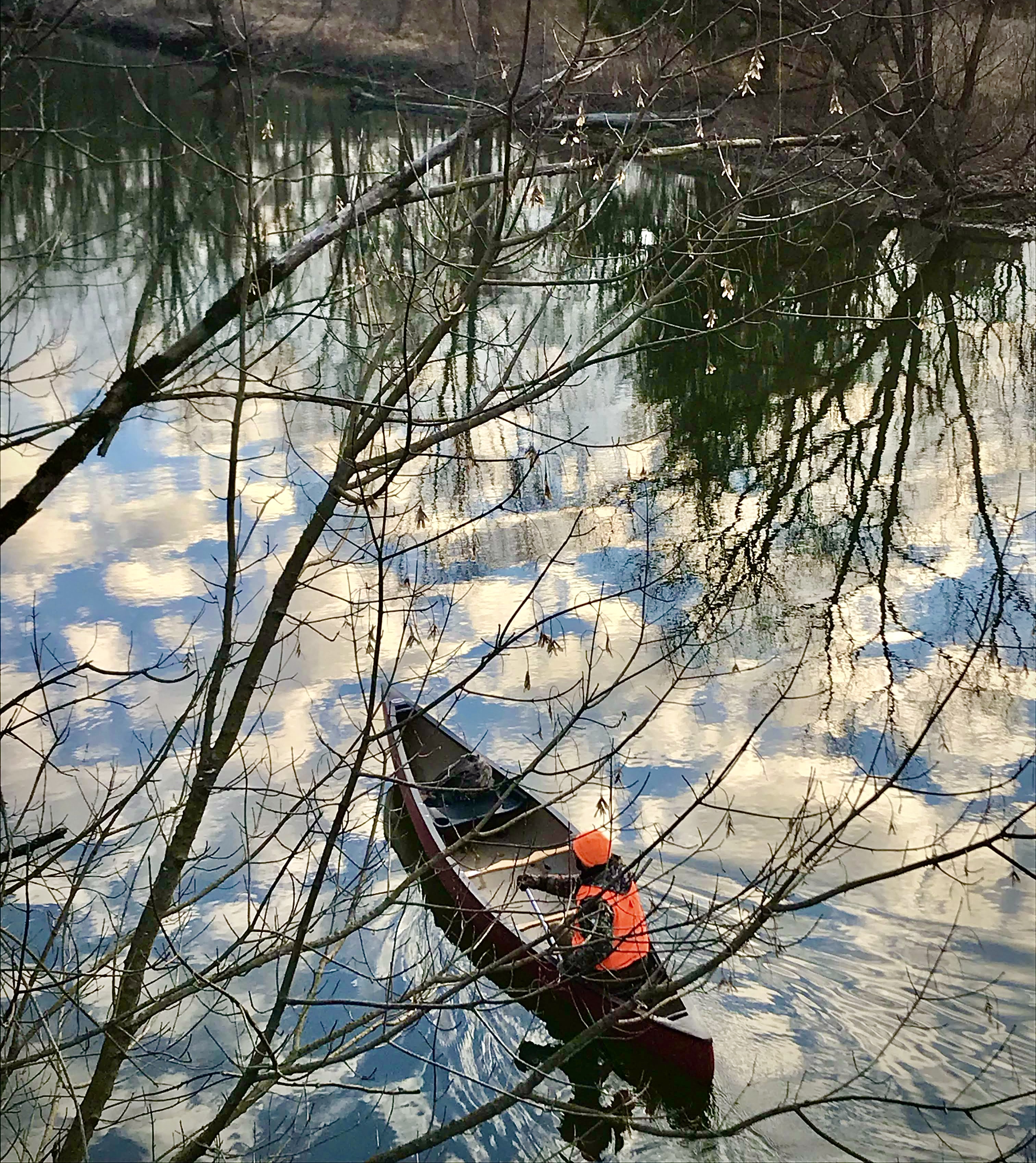
Earlier that day I had met up with my wife’s uncle Rick, who had become a great friend and mentor of mine. We were at his incredible place where he had given me permission to hunt. This was my first full season as a new hunter and I was green. I had spent many hours in the tree stand with nothing yet to show for it. I really did not mind. The property was beautiful. The stand was on a hill overlooking the pleasantly meandering Brandywine Creek. The woods were thick with old trees and tangled undergrowth. I could not have asked for more, no complaints as we went into the last day of the season.
This was all true, but deep down, I desperately wanted to bring a deer home to begin filling the freezer with wild meat and prove to myself I was capable. I got out there in the afternoon, after work. Rick suggested I head to the stand while he made a big loop around through the woods to drive or at the least kick up some deer in my direction. He was hoping as much as I, for a successful evening. After getting in the tree, I listened for him to come through the dense brush of the invasive Russian olive that choked out most of the hillside. After 90 minutes or so, I saw him, stomping through the fallow field in the creek bottom at the base of the hill. He was about 200 yards when I saw his orange hat and vest coming my way.

Suddenly an antlerless deer shot up out of the tall grass. I had been glassing that whole area for the past hour and not seen it. Rick had flushed it directly toward me. I clicked off the safety of my gun and watched it close the distance quickly. Bounding up the hill on the trail that led directly past my stand. Excitement, adrenaline, anticipation, and heightened nerves took over. At about 50 yards, I took a quick, ill-advised shot at the deer who was still moving. I could tell right away I had hit it, but it still raced off into the tangled abyss of the undergrowth.
Again, I made a second unwise decision to blood trail before Rick even made it up to me. My desire to confirm the deer was down, overtook my yet untested knowledge to give it time. I tracked small droplets of blood until I could see the poor beast laying down only 30 yards away, head still up. I backtracked to the tree to meet Rick. We flanked down to the train tracks near the bottom of the hill and circled to where we could see the deer from down below. Rick reiterated to me that we needed to give the deer time. But that damage was already done. I had clearly spooked the deer already. Just as Rick whispered these instructions to me, about 100 yards from deer, it popped up without warning and crashed down the hill towards the creek. Before we could register what was happening it had leaped into the water and begun swimming for the opposing bank.
Hunting is generally a relaxing, enjoyable activity. Yet the taking of an animal’s life can lead to high stress moments. These moments of emotional peaks and valleys can lead to difficult mental battles where staying calm, lowering your heart rate, and relying on experience and practice can make all the difference. In hunting as in most of life, it is the battles in the mind that are often the hardest to overcome. A high level of experience and a trusted buddy who has your back, are indispensable keys to success. Lucky for me, I had Rick there.
I fumbled to get more ammo into my gun, feeling like a total failure. I had let down not only my hunting mentor, but also this beautiful animal that was now suffering and terrified. I do not know what Rick must have been thinking when I began popping off rounds like I was executing a gangland drive by. But as I finally slid a shell in and raised the shotgun again to my shoulder, I heard a single, calm, measured, “crack.” I lowered my gun and looked beside me where Rick stood stoically, his gun still up, a wisp of smoke just disappearing from the end of the muzzle. I looked back at the deer and saw it floating dead now in the water.

He never made me feel bad about any of it. He celebrated with me, reiterating his excitement about me shooting the deer and he “just finishing it off.” Later as he helped walk me through the skinning process, the deer hanging from a gambrel in his pole barn, we talked through all the mistakes I had made. He never called them mistakes. It was all encouragement and understanding. The way a great teacher lets a student fail through trial and error without feeding their own ego as the master. I learned a lot that evening. Most importantly was the irreplaceable value of experience in the field, and of having a great mentor and friend to guide you along as you stumble. But also, about how quickly things can go sideways on a hunt. Staying calm, remembering what you have learned, and falling back on that knowledge and experience with patient deliberation can help you overcome the battle in your mind.

Leave a Reply