
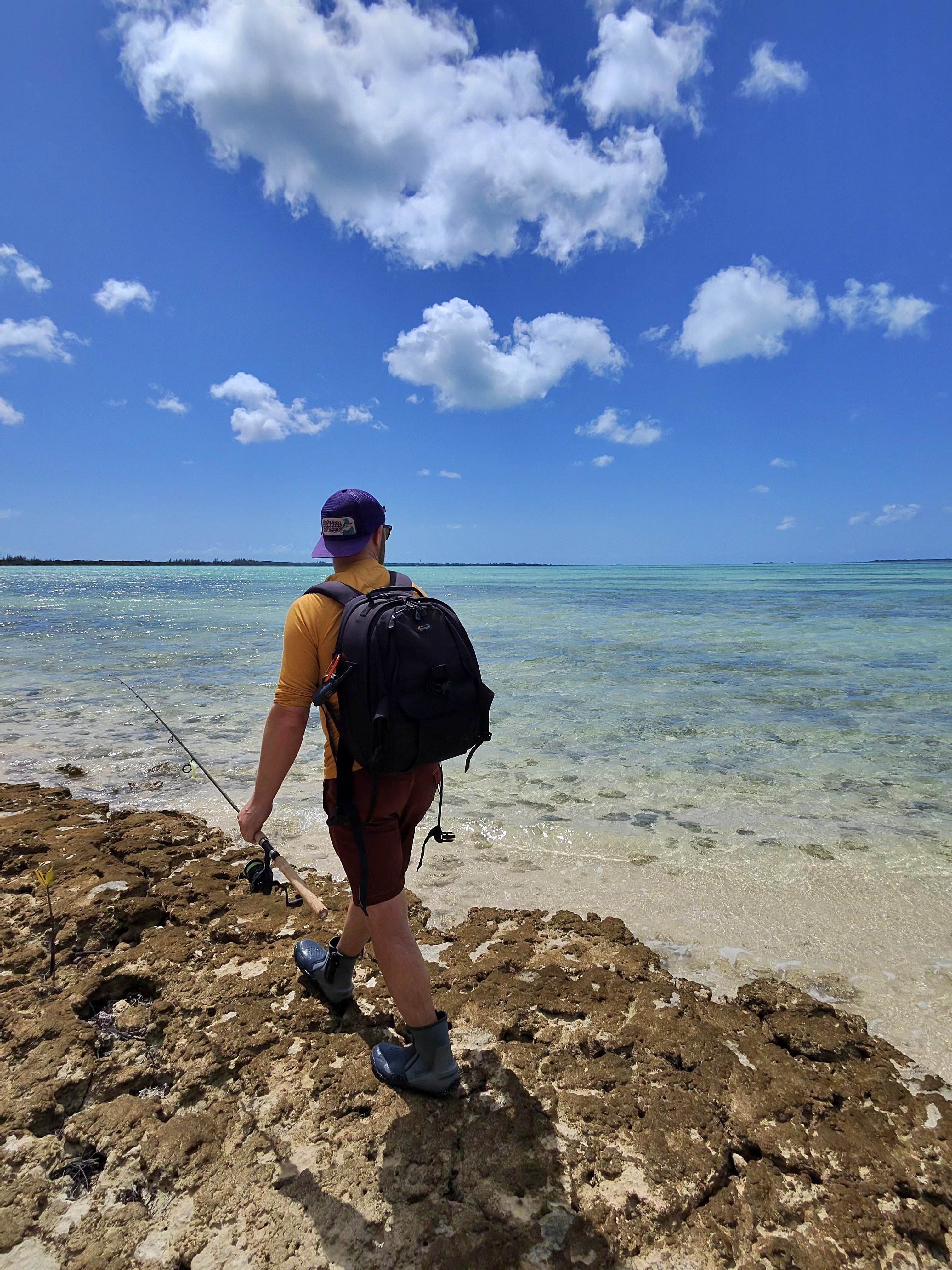
By Mike Fitzgerald, Contributor at Wild Nexus
My first time fishing in saltwater, which was a Caribbean trip, was arguably one of the most daunting angling experiences of my life. At the time I was working in a fly shop and had access to all the literature a young guy in his twenties could ask for regarding the subject, and that was all well and good until my feet where in the water on a flat. At that point, all the preconceived notions I had prior were proven so terribly wrong.
What I didn’t know was that damn near everything that I had read prior to arriving was aimed at fly fishing for three species, and while that’s fine if you’re content with that sort of thing, it never dawned on me that the potential for those three species to simply not show up was a major possibility.
Now, almost fifteen years and several trips to saltwater destinations later, I know better than to count my chickens before they hatch. The fact is that if you’re going to do a DIY saltwater fishing trip, being open to anything and everything is arguably the best way to go about it.
That first trip that I took was a strictly fly-fishing only excursion, which ended up being a terribly affective means to limit when you could actually go fishing because as soon as the wind picked up out there on the flats, it was game over. Make no mistake about it, a spinning rod is your best friend if the conditions get spicy, and there’s no limits to the different kinds of tackle that will make all kinds of saltwater species go nuts.
One thing that I never took into consideration was just how affective using soft plastics could be, but my most recent trip taught me that the utilization of soft plastic baits and the wide range of motions that they offer can play a major role in getting fish to bite, especially at times of the day when the original target species (let’s say bonefish, for the sake of argument) are otherwise all but gone from the flats.
This is a wildly advantageous means of going about a DIY trip because you’ve just allowed yourself to fish all day, no matter what the tide is doing. The vast majority of folks who take a dedicated DIY saltwater fishing trip often get hyper focused on certain species, but with a medium action spinning outfit and an arsenal of soft plastics, you will almost certainly hook into several species that you might not have caught otherwise.
Asking what the locals like to fish for and how they fish for them was something that never even crossed my mind during that first trip. I was there for bonefish, which is an inshore flats species that most anglers who don’t have constant access to bonefish will fawn over. Upon talking to the locals on a subsequent trip, two things became apparent. One was that they didn’t give a damn about bonefish. The other way that they absolutely loved to eat Mutton Snappers and Nassau Groupers. It turned out that both of these fish also lived close by, just off of the flat where I’d been hopelessly chasing educated bonefish around for the last three days, mostly unsuccessfully. Once I got the spinning rod out and started lobbing plastic baitfish patterns into the deeper drop-offs, I started getting into a few during the times of the day when I would have otherwise been back at the rental.
Until recently, I had never tried dead baiting from shore at night. The flats are a dangerous place to be after dark when the tide is up, but from the safety of the beach, you can rig a spinning rod up with a dead bait, lob it out into the ocean, and eventually something is going to come along and pick it up. Dozens of species become active at night, and while most folks jump right to sharks (and they would be right to do so), sharks aren’t the only thing to come into shallow water after the sun goes down. This is easy-going saltwater fishing that anyone on a DIY trip ought to try at least once simply because you’ll have absolutely no idea what is on the other end of your line when an unseen fish starts peeling drag. It might be a Mangrove Snapper, or it might be a 100lb Lemon Shark.
Finally, if you’re on your first DIY trip, I highly recommend observing the surroundings and taking note of the things you are seeing. The ocean has a way of telling you exactly what to do if you just pay attention to it. If you’re seeing bait boiling on the surface as predatory fish push them up from below, maybe toss something topwater related out to it. If you’re seeing barracuda out on the flats feeding on needlefish, there’s a perfect opportunity to throw a big soft plastic out and rip it back to you as fast as you can. ‘Cudas aren’t picky and can sometimes be downright aloof when it comes to the baits that they’ll eat. In many places, they seem to be everywhere.
Make sure your gear is fit for the job. That you have extra line, leaders, saltwater hooks and everything else that you might need. Saltwater species tend to teach you all about the flaws in your system if there are any.
And, in the end, remember the satisfaction you felt from your first successful saltwater DIY trip. Those memories will last a lifetime.


Leave a Reply