
By Scott Turo, Contributor at Wild Nexus
The Fish and the Obsession
The post-holiday weather may be a bit frightful here in the Pacific Northwest, but anglers still dream of chrome steelhead tugging on their lines in the morning fog and mist, listening to the river roll and the forest drip. To cross paths with a prime specimen, you need more than rod skills. Learn to make peace with the weather and embrace being wet, and study enough hydrology and fish biology to find a fishable river level and ensure you’re targeting a river with fresh steelhead.
Technically, there are two distinct species of steelhead in West Coast rivers. Summer- and winter-run steelhead have different life-history patterns that rely on the region’s diverse snowpack and rainforest-driven watersheds, resulting in separate spawning populations. All steelhead are members of the Oncorhynchus genus, and spring spawners, like their cousin, the rainbow trout, which do not migrate to the ocean.
Winter-run return to their river of birth sexually mature and ready to spawn, usually between November and April, with a pronounced peak from January through March. They can be found in coastal river systems from Southeast Alaska south along the Pacific coast to California, preferring rivers that swell with seasonal rains, which provide access to clean gravel and sustained flow required to incubate and hatch their young by June, before water levels begin to drop and expose any life left in the nest.
Summer-run return from May through October, sexually immature, and hold over to spawn the following spring. They rely more on snowmelt rivers in interior British Columbia, the Cascade Mountains, and the interior ranges that drain into the mighty Columbia and Snake Rivers in eastern Oregon, Washington, and parts of Idaho. Their migration follows the cold water upstream through summer and fall to find a suitable spot to hold for the winter, then finishes the spawning run as the water warms and the snow melts the following spring.
As a steelheader, you come to learn this distinction because it dictates where you find fish. The aficionados will say this two-paragraph life-history lesson is too general for a species as iconic, revered, and currently struggling to survive. They would be correct and likely point to rivers like Oregon’s Umpqua or Washington’s Cowlitz, which still have strong runs of both steelhead, and to times when a robust late-winter run of thick-shouldered chromers was abundant—marking a distinct spring run that is now gone. These fish used the rivers that drain across the broad coastal plain before entering Washington’s Puget Sound or Gray’s Harbor and the lower Columbia River near Portland, Oregon, and Vancouver, Washington. Rivers that flowed through old-growth forests choked with log jams, creating side channels and wetlands by forcing water across a diverse forested floodplain, complemented these diverse life histories. Fresh, clean gravel, recently scoured into position by turbulent winter flows, was ready and waiting to accept and protect steelhead eggs each spring.

The young fry are about 30 millimeters (just over an inch) long when they emerge. They seek cover for protection and food, then grow for a year or two, learning river life in freshwater before migrating to the ocean to feed and grow. Traveling as far as Japan, they’ll see a large portion of the Pacific Ocean over a one- to two-year stint at sea. Averaging 8-12 pounds upon return, fresh steelhead provided an early spring protein source for coastal tribal nations awaiting the cherished runs of spring Chinook. Today, a few tribes still maintain subsistence harvest for winter run steelhead in Washington State, amidst declining returns over the past decades.
Hatcheries have been used to supplement populations in the face of habitat loss caused by dams and development, river straightening, resulting in the removal of nature’s messy yet productive complexity. Their success and impact have been debated for years, while their popularity among anglers seeking to take home fresh reddish-orange steelhead protein from local rivers remains consistently high. Advocates for wild populations raise concerns about interbreeding and the loss of an important gene pool, urging caution. Some local steelhead-angling-focused groups, working with state fish and game, are using wild fish caught by anglers throughout the run as new broodstock to supplement the diminished capacity of the natural habitat, aiming to protect the wild heritage.
My interest centers on the challenge of finding fresh steelhead and choosing the right method to interrupt their essential journey for a few minutes. This privilege is not overlooked, and I strive to spread the spirit of the steelhead throughout my journey. A species that has weathered the storm of time and plans to continue to do so, if we give them a fighting chance.
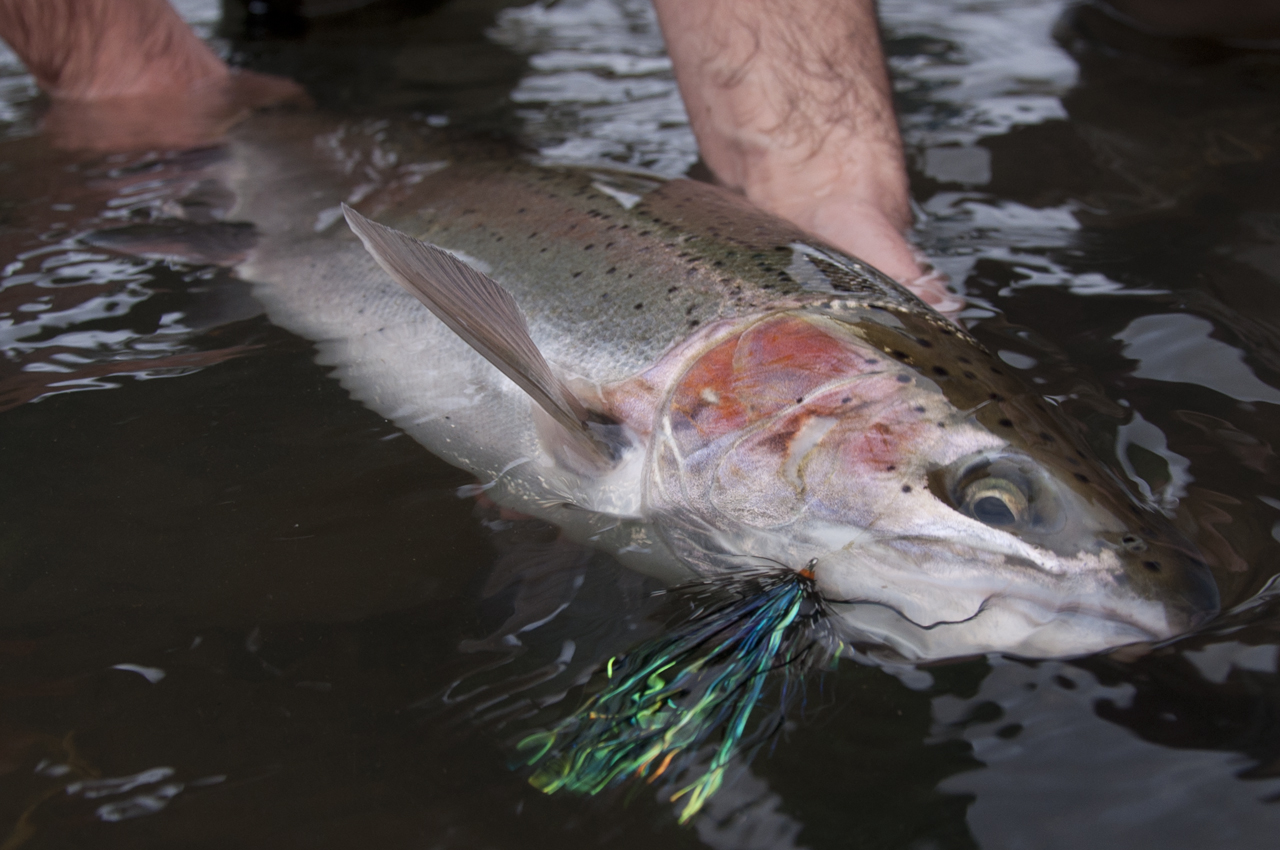
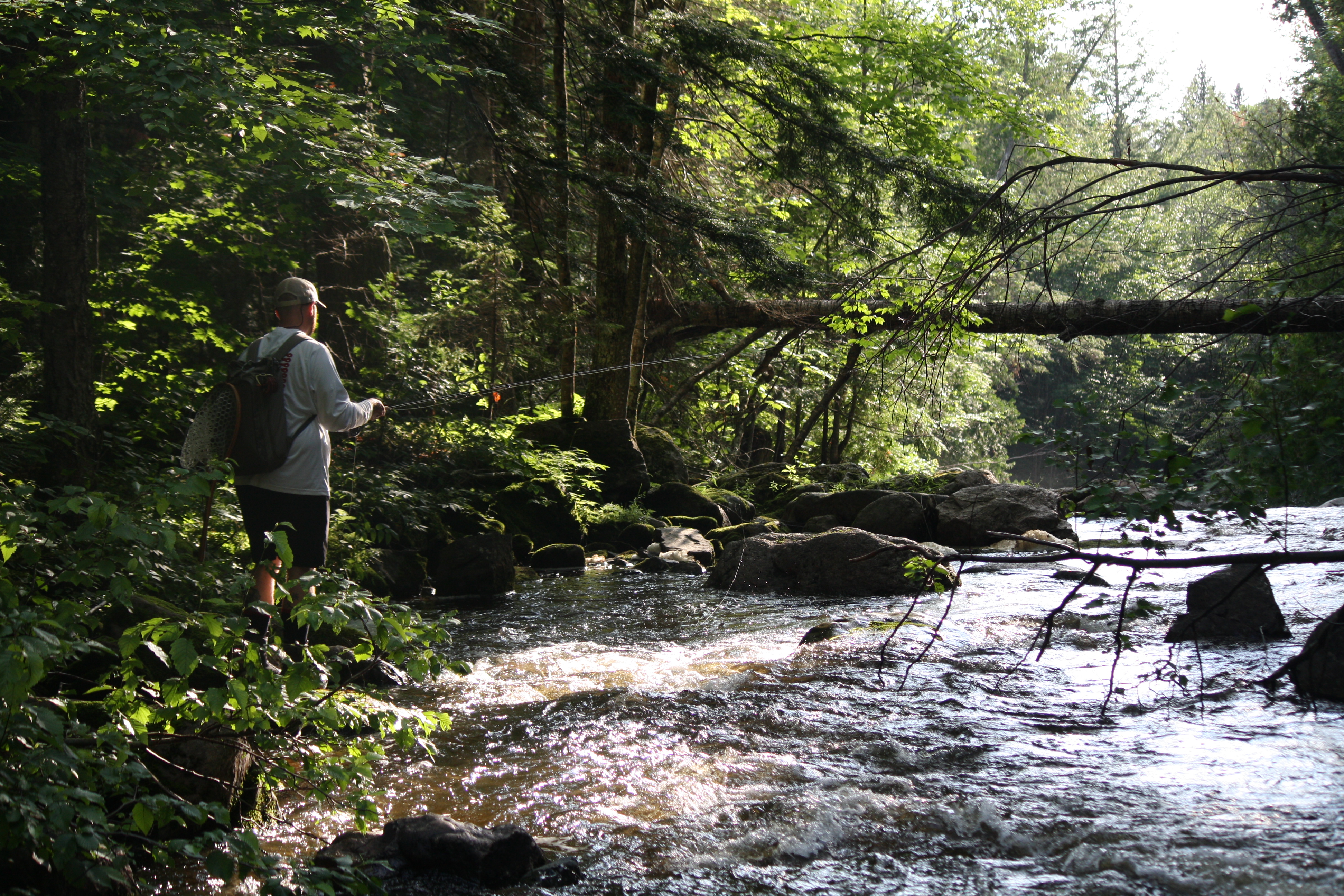
To intercept a chrome legend, I prefer a fly fished on a long rod that propels a line system designed to cover water at various depths. Using a slow swing across a chosen piece of broad, resting water, usually a chest-deep riffle, the fly can sink effortlessly due to the weight of the line. The feathers and flash material wrapped on the hook gently roll and flutter. Strategically dressed with a sharp hook, even the slightest sniff should result in a connection.

I study the rivers and rainfall from a distance to put myself at the rendezvous point, just as the flow settles to my liking after a high-flow. The clarity is improving, and the slit along the water line proves you have no excuse. The spot is yours. In my dream, I run through the list of likely places where currents slack near shore, but still hold some depth and roughness created by boulders protruding from the bed make the area an unavoidable rest stop for steelhead.
I’ve tuned my homespun craft for fur creation and paired it with a well-tested length of sinking line that dances the unweighted fly through the rest area in a tasty, agitating combination only a steelheader could describe. The line’s weight and its position parallel to the flow allow the fly to move more slowly than the current and drop into position, perfecting the search.
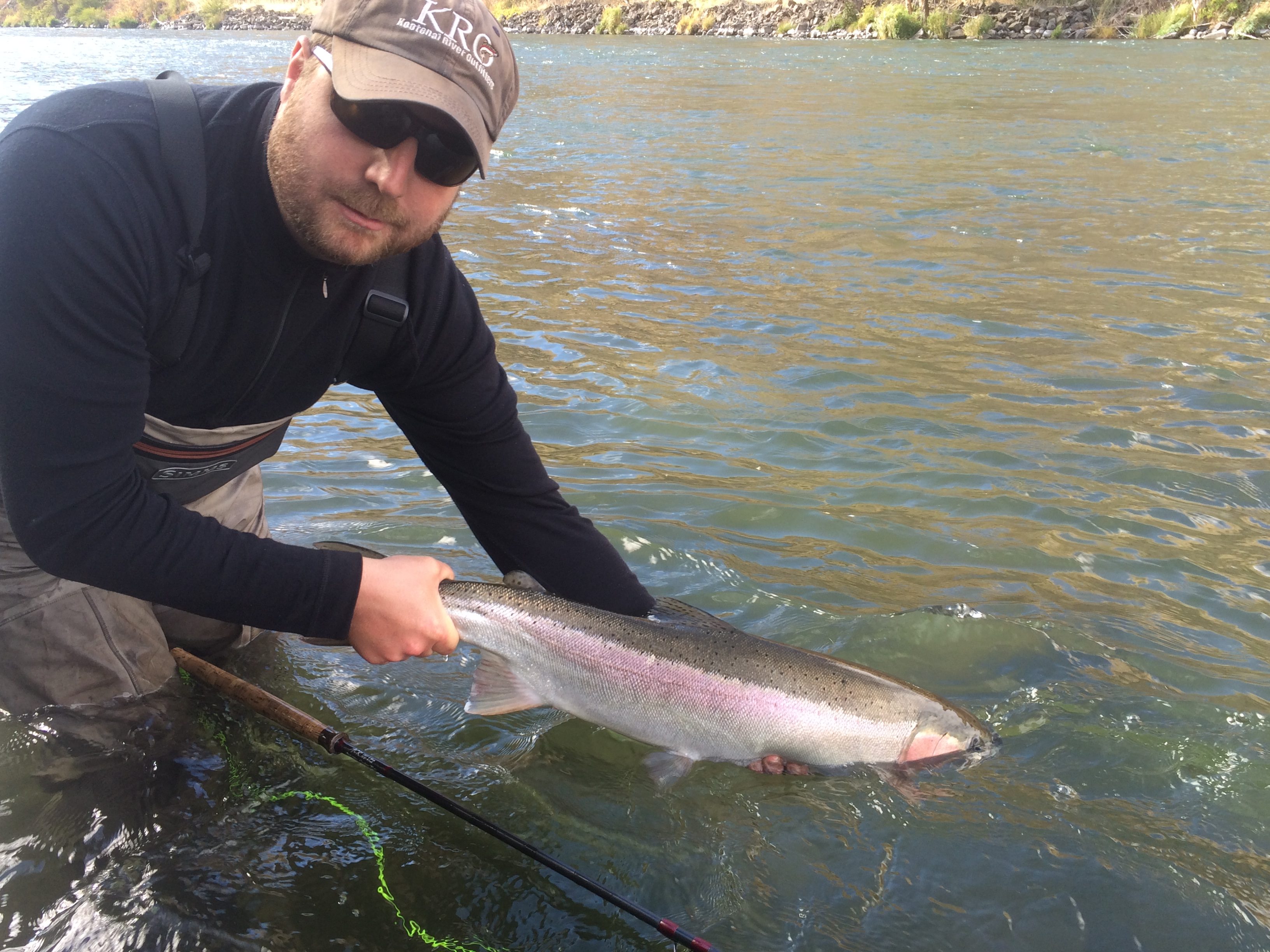
Sometimes when I do this, the reel begins to spin, the rod wobbles as the line rises to the surface, and we may make eye contact.
This is the obsession.
Leave a Reply