
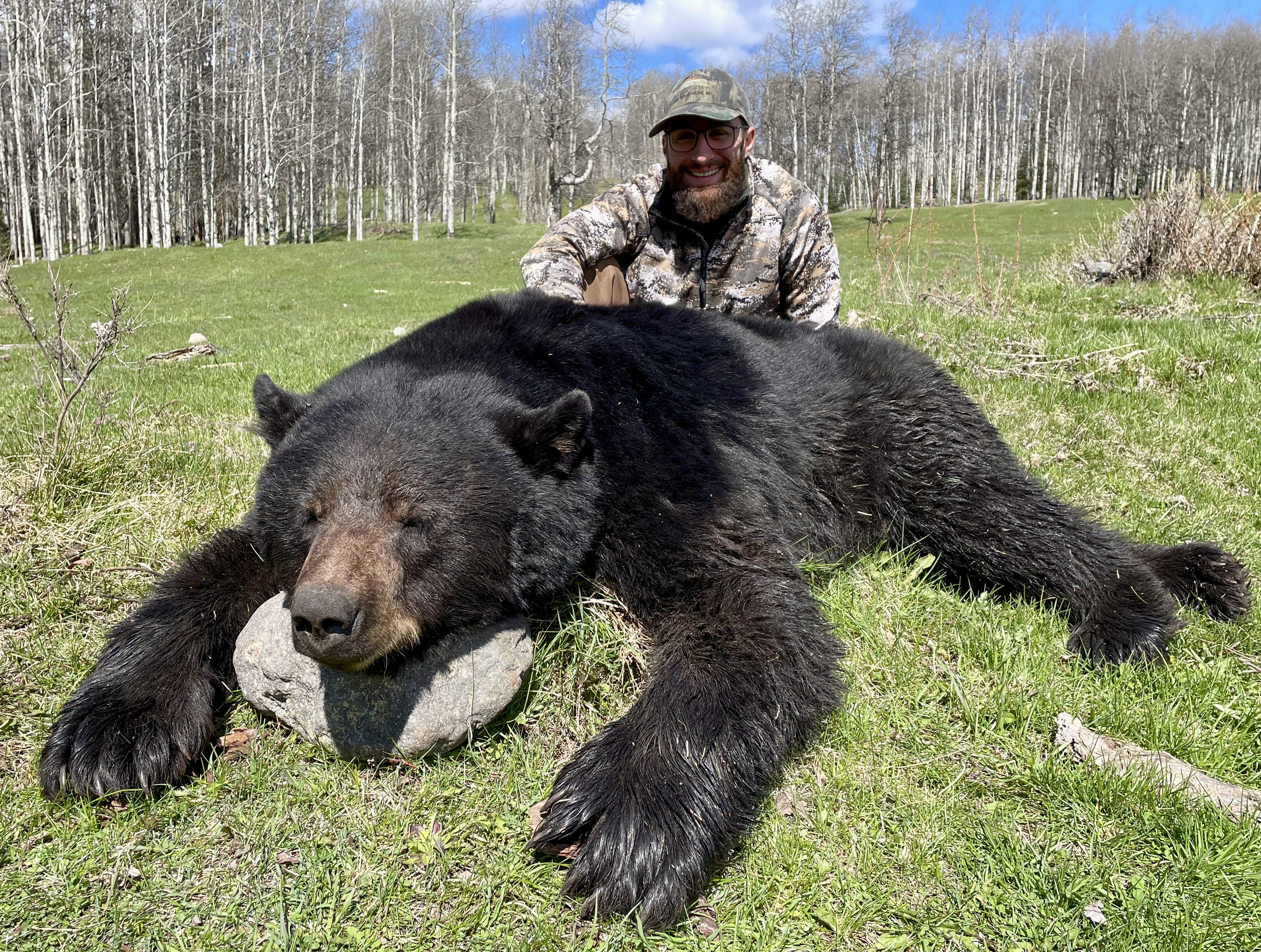
Of all big game animals commonly hunted in North America, and prized by hunters as table fare, few divide opinion like the great, Ursus americanus, the American Black Bear. I have heard from more than a few bear hunters that do not consider bear meat to be the primary reason for targeting them. I could not disagree more. And I believe I have history on my side. We need only look back to the days of the most famous bear hunter of all time, Daniel Boone, and the pioneer expansion of the late colonial period, where bear meat was highly prized as a delicacy, often preferred over the more ubiquitous deer venison. It was commonly accepted then, that on the plate, bear meat was far superior to deer meat, even being described by the well known clergymen and author of the times, James Bradley Finley as, “the most delicious and nutritious of all foods.”
Elusive, mystical, brutish-but-beautiful, even dangerous at times— the black bear is a unique symbol of wilderness that spans the breadth of our great continent. Populating the deepest reaches of forests from Alaska to Mexico, the Pacific to Atlantic coasts— only the Mountain Lion can boast a larger range than the black bear among all big game mammals.

I recently had the immense pleasure of hunting these magnificent beasts in the sublime, lakes district of British Columbia— a particularly incredible region of the awe-inspiring Pacific Northwest. Not a day goes by that I do not drift into daydreams about this memorable week spent sifting the blow downs, burns, logging cuts, and wooded pasturelands of this magical place. I was lucky enough on that trip to harvest two massive old bruins, of which the meat quickly became my family’s all time favorite wild game.
These spring-harvested black bears feed primarily on young grasses and shoots, along logging roads or in clearings and meadows where the early green growth is just beginning to sprout. I believe this early spring diet gives the meat of these special critters a grassy, clean, almost pine-tinged scent associated with the comfier rich environment they reside— think grass fed beef.
We created many amazing dishes with this delicious meat, but none more popular or coveted by me and the family than this humble “Irish” Stew, which I adapted from a recipe I originally found years ago in Bear Hunting Magazine.

Now, if you have never tasted bear meat before, you may be surprised to learn that unlike common ungulates like deer and elk, which are notoriously lean and lacking in fat, bear meat does have a considerable amount of fat marbling throughout the meat. This fatty texture means that bear meat tends to “pull” with a final cooked texture more like something between pork and beef. This makes bear meat perfect for long, slow cooking techniques like stewing or braising. That is not to say this recipe would not work with elk, deer, or moose. It does! Just keep in mind, if you substitute one of these for bear meat, you will end up with a more shredded, drier, final product as opposed to juicy chunks of fork tender bear meat. Still a great stew in the end, just, different.

Here’s the recipe-
Black Bear “Irish” Stew
· 2 lbs or so bear meat cut in 1–2 inches chunks
· Olive oil for browning the meat
· 4 whole carrots, diced
· 3-4 ribs of celery, diced
· ½ a medium sized onion diced
· 1 large potato, diced
· 1 bag of frozen or fresh peas
· 2 cloves of garlic, minced
· 1 sprig fresh thyme or about a ¼ tsp. dried
· 1 sprig fresh rosemary or about ½ tsp. dried
· 3-4 cups wild game or beef stock
· 1 bottle dark Irish stout – hence, the “Irish” Stew!
· About 2 tbs flour
· 2 tbs butter
· Salt and pepper to taste
Preheat oven to 275 degrees.
Season your meat with salt and pepper. Cover the bottom of a Dutch oven with olive oil. Brown meat in the Dutch oven, on medium-high heat.
Don’t heat the oil too much or it will smoke, but you want it hot enough so that the meat browns up nicely.
Remove meat from the Dutch oven and place aside in a bowl. In the already hot Dutch oven, add carrots, celery, and onions, and cook for 2-3 mins still over medium heat. Add garlic and cook for about 1 minute, careful not to burn the garlic. Add stock and scrape off any browned bits from the bottom of the pot. Add in herbs. Stir and let simmer for a few minutes, then add
your potato and browned meat.
Cover the pot with lid and put it in the oven to braise for 2-4 hours or until bear meat is tender. The timing is not an exact science, just check the meat with a fork after about 2 hours, and when it is tender, it is done.
At some point while it is simmering, make your thickener. Add flour and butter in a separate small pot, stirring constantly over medium heat for 2 minutes, until it is smooth and thick. Then set it aside.
When the meat is tender, return the pot to the stove top and thicken by adding in your flour/butter thickening mixture, stirring constantly until the stew has thickened- about 3-4 mins.
Remove thyme and rosemary sprigs, then add peas and stir. Let simmer on low until peas are cooked, (about 2 minutes for frozen, longer for fresh). You don’t want the peas over-cooked; they should add a slight texture difference and a nice, bright green pop of color.

When finished, ladle into bowls and serve with your favorite crusty bread, and a cold brew— the same you used to make the stew!
If you’re like me, you’ll enjoy this delicious recipe best by a crackling fire, during cold winter months, dreaming of wild places where our souls are filled, and the great black bear still reigns.

Leave a Reply