
By Mike Fitzgerald, Contributor at Wild Nexus
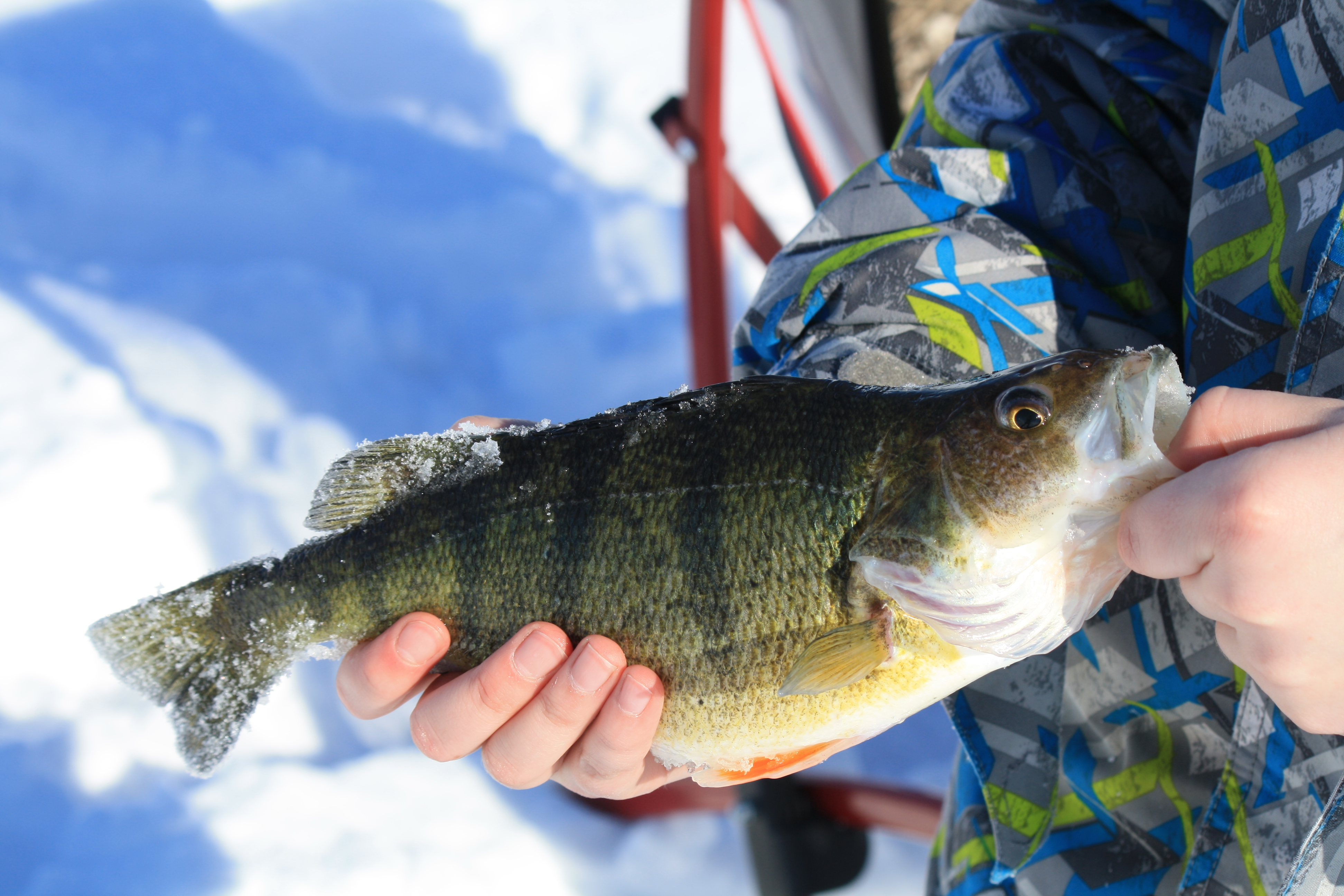
I know that it’s a matter of opinion, but winter might be the single best time to hit the ice and chase after the beautiful, plentiful, flavourful Jumbo Perch. Widely available and a fairly reliable species of fish, the Yellow Perch can provide intense ice fishing action when most other species become a fickle pursuit. A true Jumbo Perch is a matter of opinion, but I tend to lean toward anything over eleven inches in length as being fit for the category.
Early winter is a perfect time to go chase jumbos for a multitude of reasons, but it also can lead to some slightly more challenging fishing conditions than the rest of the hardwater season. For that reason, I’m going to run through popular locations and methods of finding these fish and staying on top of them.
Where to Find Them
In the autumn, it’s common for large schools of perch to invade the shallow, weedy flats of larger bodies of water where the sun still warms the water enough during the day, and their preferred food sources abound. This could be aquatic insects and scuds (freshwater shrimp), gobies and shiners, and any number of tiny invertebrates. The vegetation is still alive and healthy, with plenty of oxygen in the water, all of which keeps perch happy.
These conditions don’t change just because the water freezes, at least not right away. Quite the contrary, it can take weeks for schools of Jumbo Perch to move away from here, yet anglers often overlook these opportunities. As soon as the ice is safe enough to walk on, hitting these same locations in roughly eight to thirteen feet of water is exactly where those early winter perch will be hanging out.
Covering water is important because these fish won’t be schooled together like they will be later on in the winter. Instead, they are spread out in loose groups of three to five fish. An interesting indication of whether you are in the right place is taking note of the size of the fish that you’re catching – if most of the perch are between six and eight inches, it might pay off to pick up and move on to another location. Perch like to stay within their own size/age class, and so it’s been my experience that the biggest jumbo perch won’t be hanging around smaller fish that might compete for food sources.
At this time of year, you’ll generally be fishing over a soft bottom with minimal topography. Mud and sand adjacent to large expanses of aquatic vegetation can, and often are, magnets for jumbos at first ice. I like to cut a few holes at any point of interest, be it a transition line or a slight divot in the bottom, and use my fish finder to locate any movement, but the one thing that I won’t do is stay at an unproductive place very long. Moving around to find fish is key.
Don’t overthink equipment and gear at this time of the year. You’re more than likely going to be moving around a lot, and keeping things light tends to be important. Often, I don’t bother to bring a popup hut if I can help it. Some afternoons I might cover several hundred yards; other days, it might be less than a hundred – you never really know. Generally, I bring two light action rods – not ultralights, because it’s likely that if there are pike in the waterbody, you’ll end up finding a couple of them, too – rigged with 3-5lb monofilament or fluorocarbon, based on water quality or lack thereof. One rod will have a vertical jig in either fire tiger or perch pattern, and the other rod will be rigged with a tungsten jig and some sort of microplastic resembling one insect or another.
The perch pattern is more important than you think because truly giant perch will not hesitate to make a meal out of a smaller one, and though I tend to see this more often during the midwinter season, it still happens early on, too. Tipping the jig with half a minnow will usually seal the deal, while the secondary rod is always ready to go in case the perch are on one bug bite or another. You won’t know until you see how the jumbo perch are reacting to your presentation on the screen of your fish finder.
Generally speaking, once you begin to locate jumbos consistently, making note of what depth and what time of the day – usually the afternoon tends to be the best bite – will allow you to stay on fish throughout the first few weeks of the early ice season, but if you notice that the fish have moved off, it could be because a large predator such has moved in, or because the oxygen in the shallows has dissipated enough that their forage species have become scarce. Be ready to adapt and move into the midwinter season when the latter happens. There’s not a whole lot that can be done about the former.
Leave a Reply