


Shoot Season
Summer is when 3-D archery shoots are in full swing; you could attend one every weekend or even plan a road trip around them if that’s your thing. It’s a great way to experience a true cross-section of America. You’ll see everybody from the hard-core, tech-ed-out flat brimmers with chest packs full of gadgets, ready to call out the serial numbers on each target before the shot, to families who take archery seriously, bringing their newborns out on the course. Maybe you’ll see the serious hunter types who come dressed in full camo, with loaded packs, just to make sure everything’s working 100%. Expect to see families with one generation of shooters out on the course. That’s the amazing thing: there’s room for everyone.
They are called 3-D shoots because the targets are life-size, three-dimensional foam sculptures, painted to look like the real thing. Archery clubs stock up and, as in our case, even share a trailer full of at least 50 targets for a shoot. When lugged into the woods in groups of 20-25, they can create a pretty sweet course with hunting and novelty shots for off-season practice. These shoots are the money-maker for most clubs, generating enough profit to fund next year’s event.
I shoot a longbow, so I lean toward traditional archery shoots where only longbows, recurves, and self-bows are allowed. However, at a good course with fun shots and hunting-style situations, you may find me mixed in with the modern-bow crowd. My local club in Oregon, the Traditional Archers of Central Oregon (TACO for short), hosts a popular 3-D shoot called Stick and Sage on the first full weekend of June each year. It’s been held for over two decades and draws more than 200 enthusiastic traditional archers of all ages for a three-day event. We like to think it’s the best 3-D shoot in the state, based on feedback, of course.

The location in the Deschutes National Forest, along the east slope of the Cascade Mountains, is a dry conifer forest featuring ponderosa pine, Douglas fir, and a few western hemlock trees. It’s a great place to hide a foam cougar in a tree or stage a scene of a realistic family of bears attacking a tent. Follow the archery-target-painted sandwich board signs down a dusty two-track to the event. A registration and raffle tent marks the headquarters, where you’ll find the arrow bucket, a communal point where lost arrows dug from the forest duff are left to be reunited with their owners. The joy and agony swirling around the bucket can be intense. Camping and the central Oregon moon dust you’ll get covered in are free, with no assigned sites; it’s just the way we like it.
Bring your cash to register and buy raffle tickets for great prizes. This is a traditional crowd who knows the value of handmade and homemade. Expect to find unique, one-of-a-kind pieces, along with several tables’ worth of outdoorsy stuff in the raffle. My memorable year included taking home an on X Maps membership, a one-year subscription to Traditional Bowhunter Magazine, a set of GrizzlyStik broadheads, and some custom Flu Flu arrows made by a member of our group. Flu Flu arrows are meant to be shot in the air or at small game because the larger, full-length feathers create more drag and slow the arrow’s speed, preventing loss and reducing damage to small game harvested for food.
The main event at our Stick and Sage Shoot is the annual Milk Jug Championship. The winner shares a portion of the entry fees with the club and has their name added to a plaque displayed at the registration table, alongside other champions over the years. In this event, two water-filled milk jugs are balanced on a pendulum. Two archers face off at 10 yards, each with their own jug, and shoot five arrows tipped with target points. On the GO call, each archer must shoot the water out of their jug, causing the opponent’s jug to touch the ground. Once each competitor has shot all five arrows, the arrows can be retrieved for another round. Arrows stuck in the jug cannot be removed, even if all five are there.
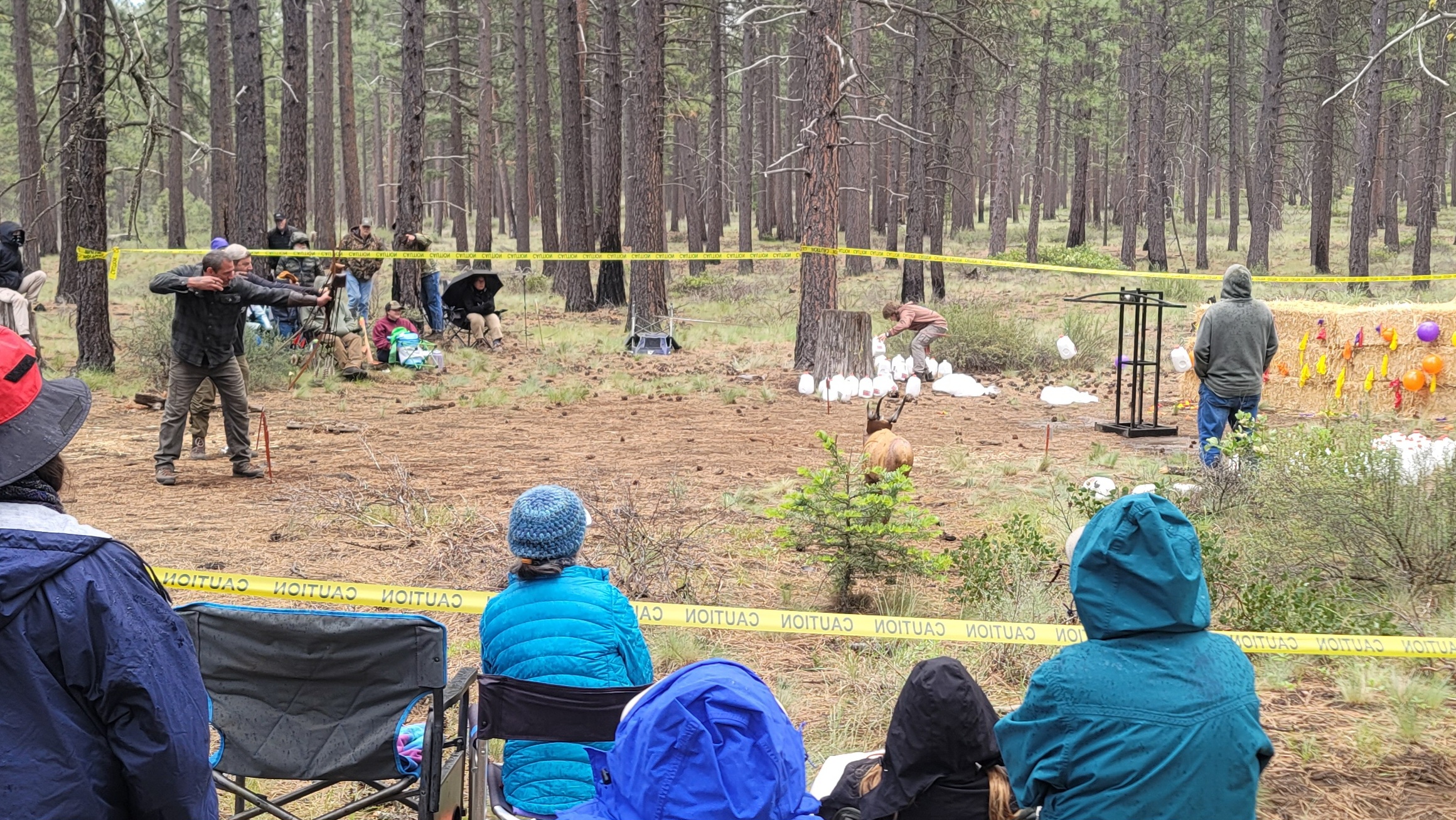
I like to think I am a competitor and can climb through the bracket with ease, but this is archery, a game of inches, so it’s really anybody’s game. That said, I felt 2026 was my year. Some early-morning practice on a paper plate with a 2” red circle of spray paint at 10 yards left me feeling that the hand-eye coordination developed over thousands of shots was firing correctly. Later that afternoon, I advanced quickly to the third round in the competition. My 630-grain arrows were blowing through the jugs at center mass on the first two shots, finishing the job quickly. A miss or a glancing blow, leaving no holes in the first two shots, usually means defeat.
To speed up the reload, I tuck the second arrow in my sock or in the top of my boot. This minimizes the distance my hand has to travel to grab it and bring it back to the string on my longbow. It’s worked for years and kept me competitive. This year, in the third round of the elite eight against last year’s champ, a shooter from our local club whom I shoot with every week, I reached for the second arrow in my boot, and it flew out of my boot and my hand, landing four feet to my left. Instead of reaching for another in my quiver attached to my bow, I went for the one on the ground, losing the round. It happened so fast that I am still trying to figure out what happened, and I have the video of each round to replay.
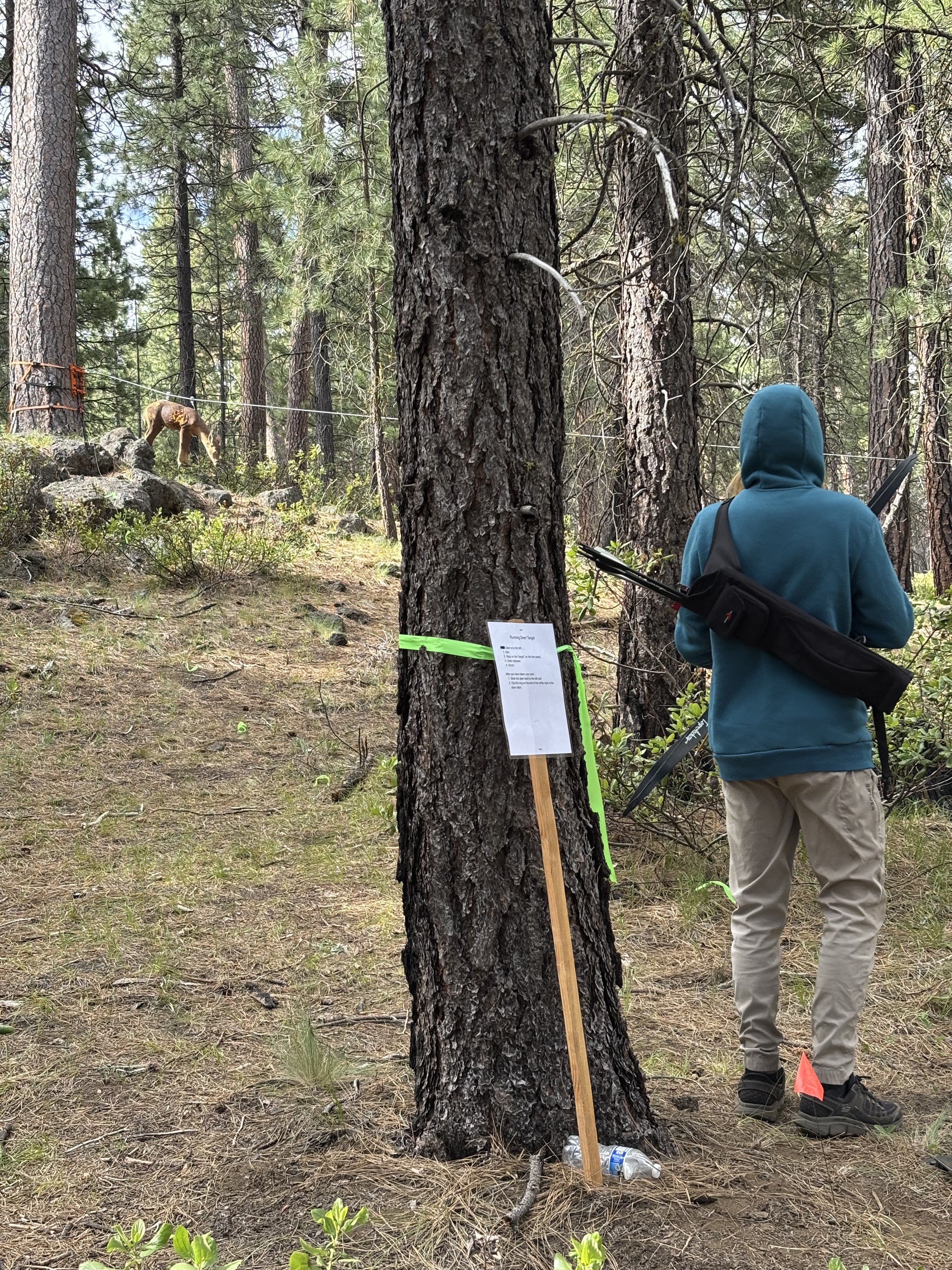
Next weekend, I am attending a shoot hosted by the Traditional Archers of Oregon, our statewide group. The novelty shots here include group rounds that simulate medieval scenarios, with arrows launched over or through a small slit in a castle wall, as well as target courses.
Next year is Oregon’s turn to host the Western States Traditional Rendezvous, an event held in one state each Memorial Day Weekend, from California to Montana. In 2027, the shoot will be held at Hoodoo Ski Area, near Sisters, Oregon, about ten miles from the Stick and Sage shoot the following weekend. Western States will attract a host of vendors and the occasional speaker, along with a larger cross-section of the traditional community. This is the road trip opportunity I mentioned, with another shoot in eastern Oregon called Rendezvous on the River, usually held the next weekend after Stick and Sage.
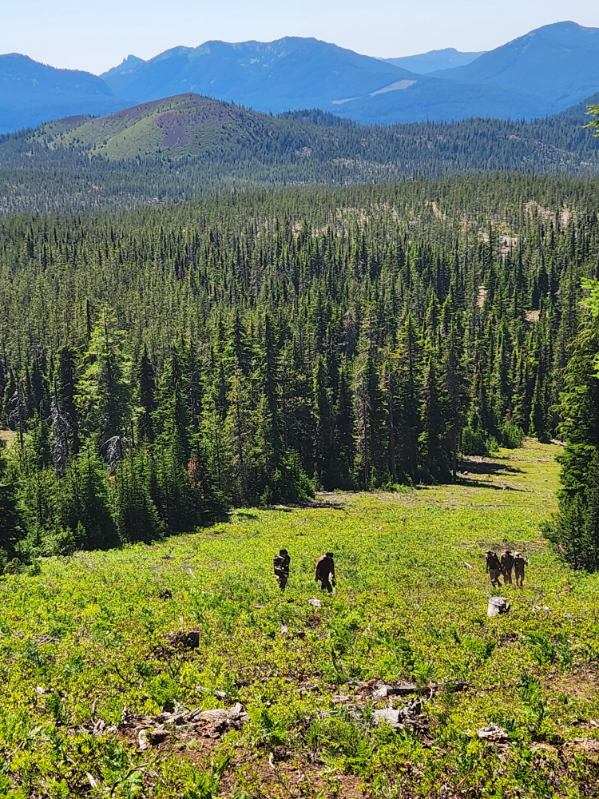
Last year, a group of TACO members attended the Hoyt Archery-sponsored Northwest Mountain Challenge at Hoodoo Ski Area to represent traditional archery at this mostly modern event. It is a beautiful country with a rugged course; hence the name “challenge.” I can assure you that the traditional shoot at this same location will choose the easier trail down the mountain after riding the ski lift to the top. As you should on any course, we stepped up to close the distance on targets that were out of reasonable range for trad bows. Hiking straight up a ski slope through shin-deep, partly mowed brush and over rubble turned out to be an excellent group bonding event.
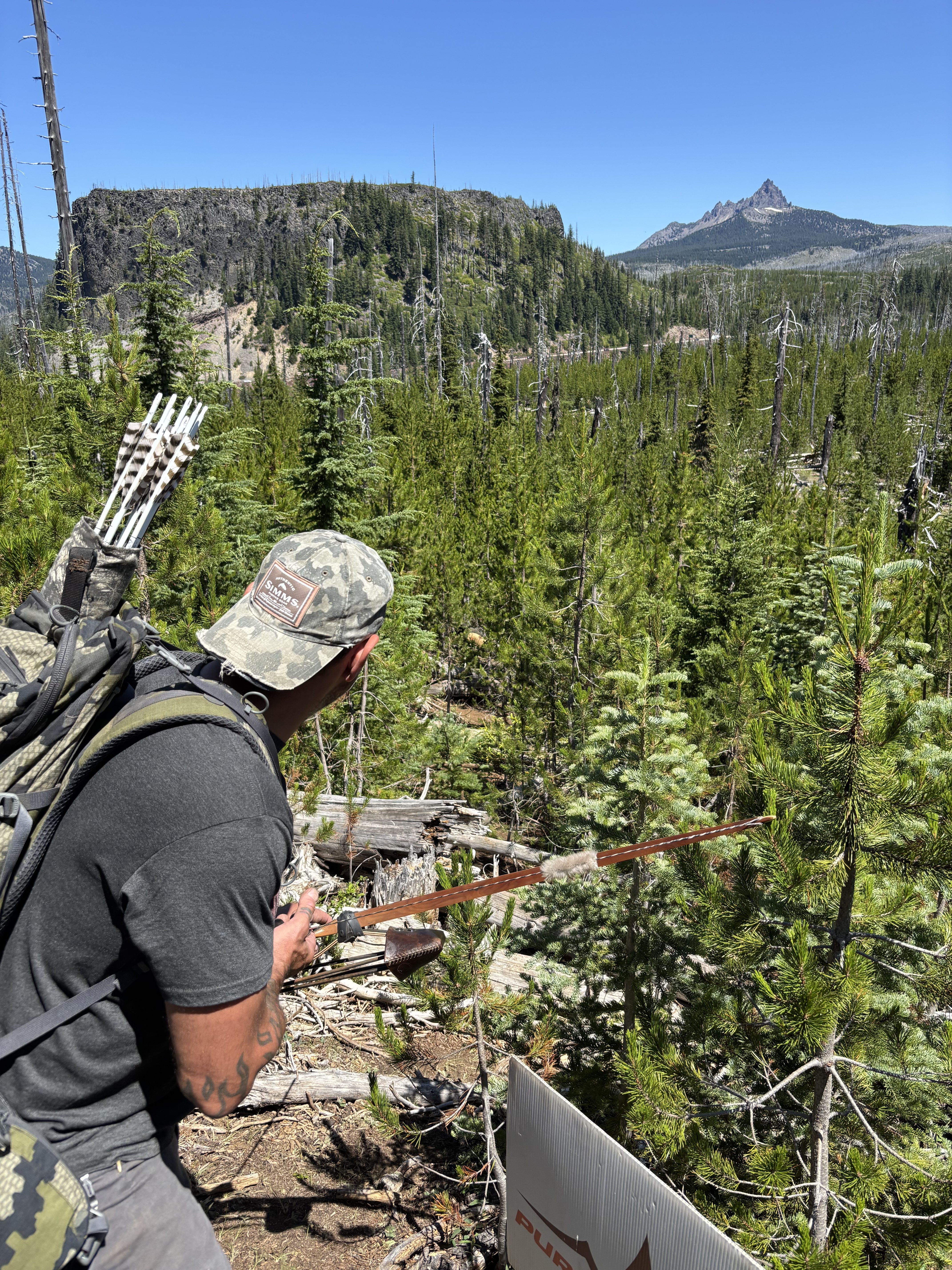
The Northwest Mountain Challenge is a spin-off of the larger Total Archery Challenge you may have seen in your media outlets. Here, you can win a truck by trying your luck at hitting the target’s center ring; a heart shot on a big game target at 111 yards gets you an entry into the drawing held after all the shoots have been completed. I suggest browsing YouTube to watch your favorite hunting celebrity take their chance. It’s an addictive pay-to-play, unlimited-shots fundraiser for a chance to win the truck.
I hope to head east one day to the Tennessee Classic, held annually in early May by the Twin Oaks Bowhunters in Champmansboro, TN. The eastern shoots dwarf their western counterparts across the board: targets, vendors, courses, and attendees. The Tennessee Classic is known for the Ultimate Self-Bow Challenge, in which participants have several days to craft their own self-bow and then shoot a scored round on the course. That is some serious traditional business over the weekend.
A potluck is a customary way to bring everyone together and is common at many shoots, creating a very welcoming atmosphere. Interested archers who would like to give it a try should call ahead to ask the host club whether any loaner bows and arrows are available for the day. Many clubs host family nights or other learning events to recruit new archers and make equipment available to loan at the shoot if requested in advance. Vendors will have demo bows for prospective customers to shoot and try different grip styles and draw weights.
If you have never been, I encourage you to look up your local archery club and see what they offer. My guess is you’ll find an amazing cross-section of great people ready to welcome you into the fun.